Car Seat Battles Are Not a Vote on the Whole Day
A practical guide to preparing for car rides, offering limited choices, and handling resistance while keeping car-seat safety boundaries clear.
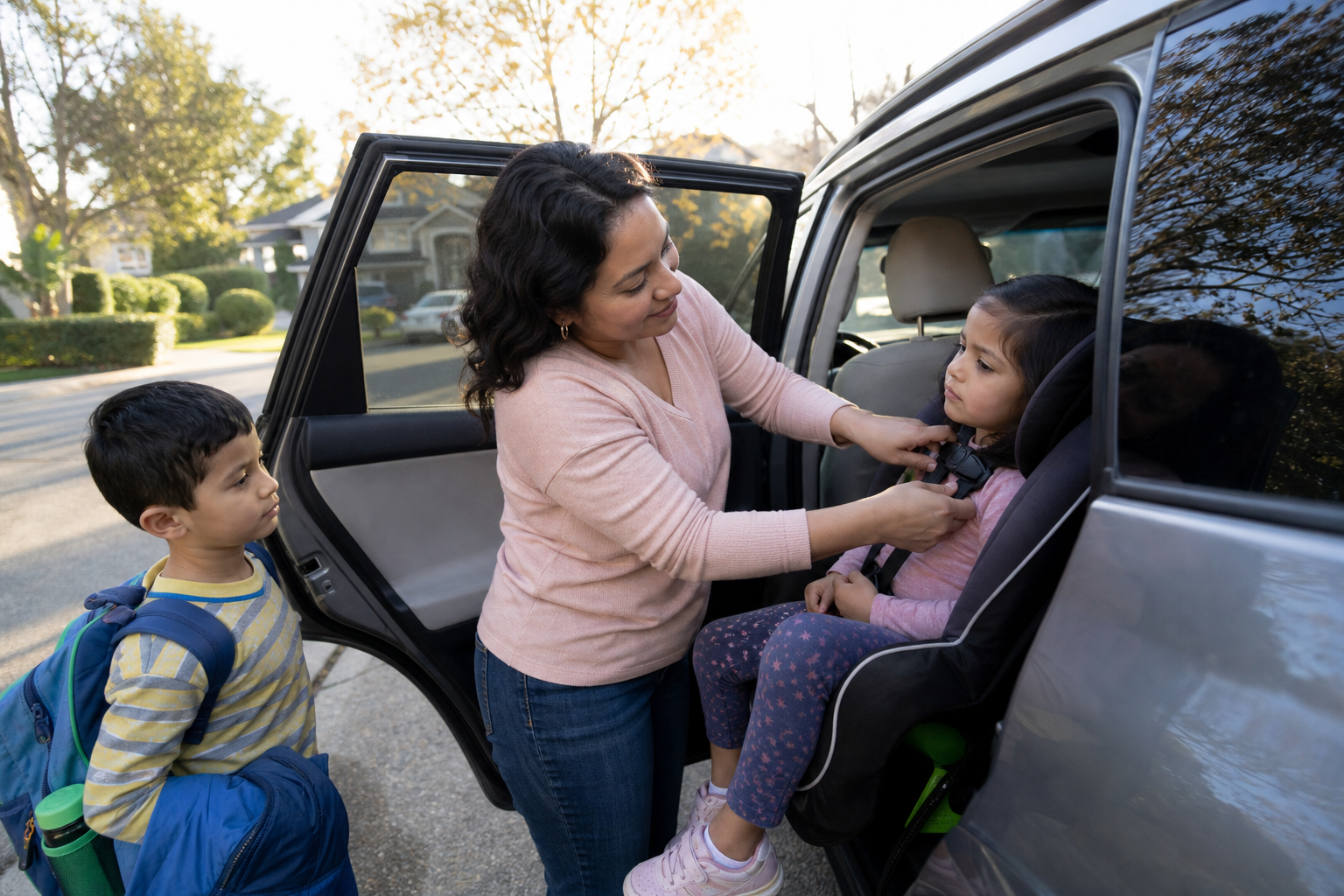
When a child refuses the car seat, keep the safety boundary fixed and make everything around it simpler. The vehicle does not move until the child is secured exactly as required by the child-restraint manufacturer’s instructions, the vehicle owner’s manual and applicable local rules. A warning, two safe choices and one script can reduce the decisions.
Car seat battles are often tangled up with the transition: play is ending, an adult is hurrying, the car feels too hot or cold, or a small discomfort has become the focus of the entire morning. You can respond to those concerns without changing the non-negotiable requirement to ride correctly secured.
Start before you reach the car
Abrupt endings can make the buckle the final target of frustration that began somewhere else. Give one concrete warning when possible: “Two more minutes, then shoes and car.” Avoid a chain of warnings that keeps moving the finish line.
At the end of an activity, offer a job that leads toward departure: carry the water bottle, press the door button or choose the first song. The child gets a little agency, but the destination and the restraint are not up for a vote. This is the same reason a small goodbye ritual can help when leaving the playground with preschoolers.
Use the same short car-seat routine
- Name the next step: “It is time to get in your seat.”
- Offer two safe choices: “Climb in yourself or have me lift you?”
- Follow the instructions: Secure the child only as directed for that specific restraint and vehicle.
- Move on: Start the chosen song, hand over an allowed comfort item or talk about what happens after arrival.
Keep the order stable even if the mood changes. Predictability does not guarantee cooperation, but it removes extra negotiation from an already difficult moment.
Offer choices that do not change the safety setup
A useful choice gives control over something flexible:
- climb in or receive help;
- carry the bag or let the adult carry it;
- choose between two songs;
- bring one permitted comfort item or leave it at home;
- tell the adult when everyone is ready for the door to close.
Do not offer choices about whether to use the restraint, whether to fasten required parts or how tightly and where components sit. Those details come from the restraint instructions, the vehicle manual and local requirements, not from a child’s preference or a general online tip.
A strong wish to control the process can be part of broader toddler independence. Give the child ownership of a safe step while the adult remains responsible for checking the final setup.
Simple scripts for car seat resistance
Long explanations are hard to process in a noisy, emotional moment. Try one sentence, then repeat it rather than inventing new arguments:
- “You do not want to get in. We will go when you are secured in your seat.”
- “You may climb in, or I can help your body in.”
- “I hear that you are angry. The buckle still has to be used as instructed.”
- “First the car-seat routine, then you choose the music.”
- “Something feels wrong. I will check it before we go.”
A calm script is a tool for clarity, not a promise that the child will stop crying. The adult can acknowledge the feeling and keep the boundary at the same time.
When the struggle escalates
If possible, pause in a place away from moving traffic and other immediate hazards. Use fewer words, keep your movements steady and give the child a moment to respond. If the child cannot be secured according to the applicable instructions and rules, do not start the trip. When a deadline is involved, notifying the destination that you are delayed is safer than treating the restraint as optional.
Avoid turning the moment into a threat about the entire day. Describe the immediate sequence instead: “We are getting safely ready for the car. Then we will leave.” Once the child is secured, let the argument end. The morning does not need a second trial in the driver’s seat.
Check discomfort without improvising the fit
A complaint may point to heat, cold, crumbs, a twisted garment, an awkward seam or another problem worth checking. Look and listen before assuming the child is delaying. The discussion of kids refusing coats is a useful reminder that clothing can feel different to a child than it looks to an adult.
At the same time, do not add padding, accessories, buckle extenders or other items unless the restraint manufacturer specifically permits them. Do not change the harness or installation based on a general article. Consult the product instructions and vehicle manual; for unresolved fit or installation questions, contact the manufacturer or a qualified child-passenger-safety professional available in your area.
If a child repeatedly reports pain, appears unwell or reacts in a way that is unusual for them, pause the routine and seek appropriate professional advice rather than assuming it is only resistance.
Prepare for the next departure
After everyone is calm, review the pattern without blaming the child. A short checklist can reveal what is making the transition harder:
- Is the correct restraint being used and maintained according to its instructions?
- Does the vehicle manual add any requirements for this setup?
- Have the caregivers checked the applicable local rules?
- Is the seat area clear of crumbs or objects causing discomfort?
- Can departure happen before the child becomes very hungry or tired?
- Do all caregivers use the same short script and sequence?
- Which two safe choices will be offered?
- Is there enough time for the child to climb in without being rushed?
Practise the routine while the car is parked and there is no trip to make. The child can rehearse climbing in and choosing a song while the adult practises the same brief words. Any securing and fit checks should still follow the relevant instructions every time.
Frequently asked questions
Why does my toddler suddenly hate the car seat?
The trigger may be the transition, a wish for control, discomfort or an association with a rushed departure. Check the physical setup according to the restraint and vehicle instructions, then look at what happens immediately before the protest. A sudden or persistent change that concerns you deserves appropriate professional advice.
Should I let my child buckle the car seat?
Only allow participation that the restraint manufacturer’s instructions permit, and always have the responsible adult verify that the child is secured correctly before the vehicle moves. Do not assume that a click means the complete setup is correct.
What if my child cries after being secured?
Stay calm, acknowledge the feeling and check for an obvious problem when it is safe to do so. Crying does not by itself tell you whether the restraint is fitted correctly, so continue to follow the product instructions, vehicle manual and local rules. Stop the vehicle safely if a situation needs attention.
How long does it take to end car seat battles?
There is no reliable timetable. A consistent routine may make departures more predictable, but progress can be uneven and varies by child and situation. Measure success by a clear, correctly followed process—not by whether every ride begins without protest.
Ready to create your own magical video?
Explore our personalized invitations and surprise videos made for unforgettable moments.
Shop videos