A First Day of School Video Can Hold the Brave Little Wave
Capture the first school day with a five-shot checklist, simple before-and-after prompts, editing ideas, and privacy checks for your family video.
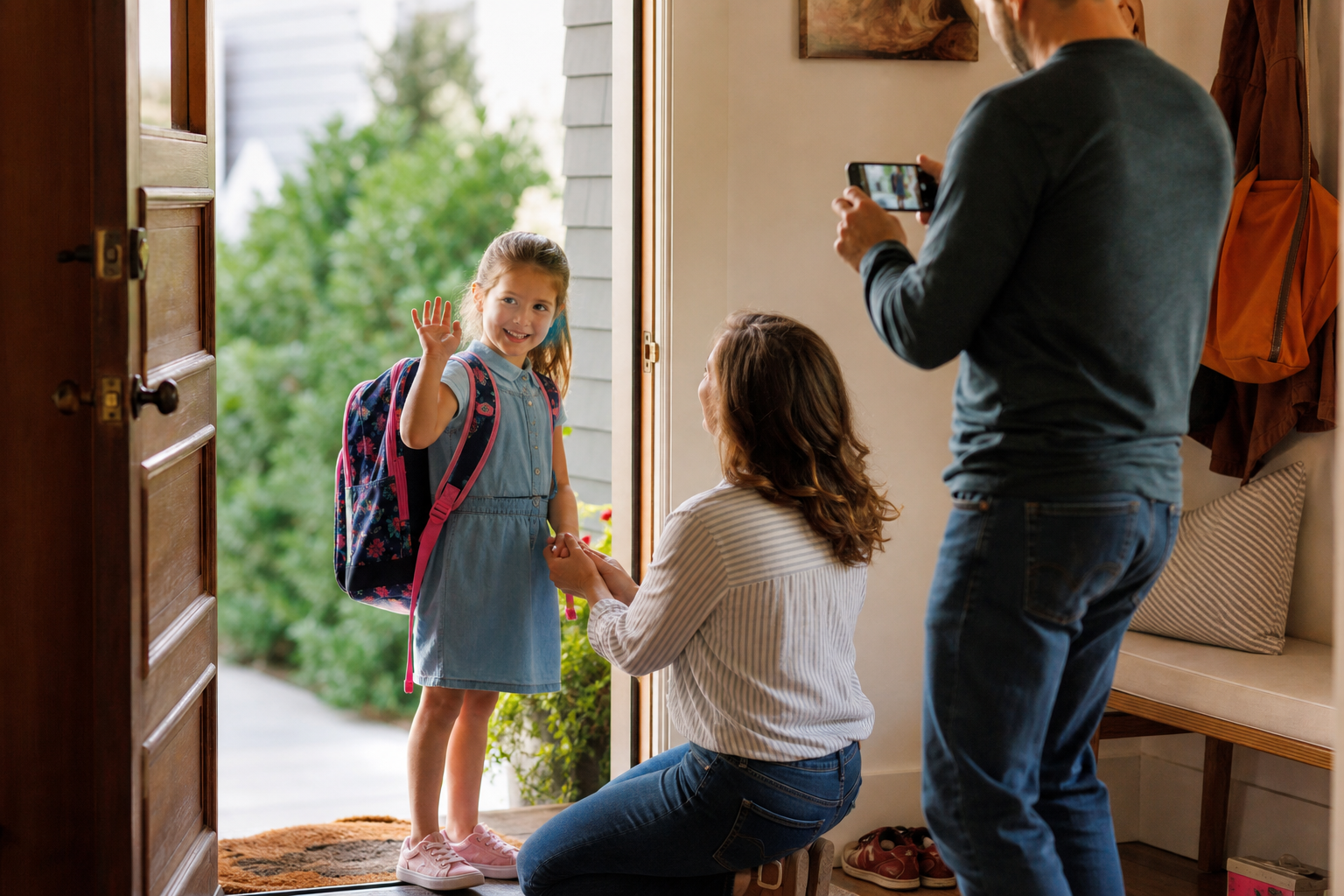
A first day of school video does not need a long interview, matching signs, or a perfect walk to the door. Capture three short pieces: one scene before leaving, one moment at the transition, and one reflection after school. That is enough to save the child’s voice, the size of the backpack, the brave wave, and the story they tell once the day is over—without turning a busy morning into a production.
Decide what you want to remember
Choose one purpose before picking up the phone. You might want to preserve:
- the child’s voice and expectations before a new school year;
- the visual changes from one year to the next;
- a milestone such as the first day of kindergarten or a new school;
- a short update for relatives who live far away;
- one chapter for a larger family video.
A clear purpose prevents over-recording. You do not need to document every shoe, snack, and step to the car.
Use a three-part first day story
Part 1: Before leaving
Record one wide shot that shows the morning setting and one close detail: the backpack by the door, hands fastening a coat, a favorite key ring, lunch going into a bag, or shoes waiting on the mat. Then ask one question while the child is doing something natural.
If the morning already feels rushed, skip the formal interview. The article on morning routine pressure is a useful reminder that a missing sock does not need an audience or a second take.
Part 2: The transition
The doorway, bus stop, walk, or car goodbye is often the emotional center of the story. Keep the phone steady, stay out of the path, and capture a few seconds rather than the entire departure. A half-wave, a deep breath, or the child adjusting a backpack may say more than a posed announcement.
Do not record where filming is restricted, and do not block staff, other families, traffic, or the child’s next step. If the child wants privacy, save the morning details at home and let the transition belong to them.
Part 3: After school
The second half of the story is often more revealing than the morning. Record one quiet answer after the child has had time to put down the bag, eat, or settle into the afternoon. Avoid demanding a full report at the door. One concrete prompt is enough.
First day of school video prompts
Questions work best when they are easy to answer without guessing what an adult wants to hear. Pick two before school and one after. Do not ask all of them.
Before school
- What are you most curious about today?
- What do you hope happens at recess or lunch?
- What is one thing you already know how to do?
- What would you like your teacher to know about you?
- Show me one thing in your backpack and tell me why it is there.
After school
- What is one thing you did that you did not expect?
- What made you smile?
- What place at school do you remember best?
- What is one thing you want to tell yourself before tomorrow?
- Can you describe the day in three words?
Keep the child’s actual wording, including the pauses and funny details. Those small changes in voice and storytelling are part of the record. A family story video can preserve these slightly imperfect versions before everyone agrees on a neater family memory.
A five-shot checklist for a busy morning
- The date or year: record a simple card, calendar, or spoken line so the clip makes sense later.
- One full scene: the child in the hallway, kitchen, porch, or another familiar place.
- One close detail: hands, shoes, backpack, drawing, or lunchbox.
- One short answer: use a single question from the prompt list.
- The transition: a wave, walk, door closing, or another brief goodbye moment.
If you capture only two of the five, you still have a useful memory. The milestone video article explores why the small, wobbly proof of change can matter more than a polished pose.
Record without adding pressure
- Charge the phone and clear storage the night before.
- Clean the camera lens before the morning becomes busy.
- Use natural window light when it is available.
- Hold the phone at the child’s level instead of filming down from above.
- Record short clips, leaving a quiet second at the beginning and end.
- Ask before filming a close or emotional moment.
- Accept “not now” without turning the video into a negotiation.
- Never delay departure for another take.
You can recreate the structure later without pretending it happened in the morning. A calm after-school clip beside the backpack is more honest than a tense performance labeled as spontaneous.
Edit the video into a short keepsake
Start with the date and school-year label, then arrange the clips in order: home, transition, return. Keep natural sound where it adds context—a zipper, footsteps, a laugh, or the child’s answer. Use captions only for information the image cannot supply, such as the grade or an exact phrase that is hard to hear.
Simple cuts usually work better than busy effects. Remove repeated shots and any clip that exposes information you do not want to share. End with the after-school answer or a quiet detail such as the backpack back on its hook.
If you make these clips each year, they can become one chapter in a family yearbook video. Save the original files as well as the edited version so future you can choose a different story.
Protect the child’s privacy
A family keepsake and a public social post do not need to be the same file. Before sharing outside a private family space, check for:
- school names or logos;
- name tags, classroom lists, or transport details;
- house numbers, street signs, or regular pickup locations;
- other children who have not been included with permission;
- documents, schedules, or contact information in the background;
- a child’s clearly stated wish not to post the clip.
Keep the full version private when it contains details that help the family remember the day. If you want to share publicly, make a shorter copy with identifying information removed.
Final first-day video checklist
- The year and grade are labeled accurately.
- The video has a beginning, transition, and after-school moment.
- The child’s answer sounds like them, not a rehearsed adult line.
- No clip makes the morning later or harder.
- Private school, home, and travel details are removed from public versions.
- Other children are not posted without permission.
- The finished video plays correctly on a second device.
- Original files and a backup are saved.
Frequently asked questions
What should I film on the first day of school?
Film one scene before leaving, one close detail, a short answer to one question, a brief transition such as a wave or walk, and one after-school reflection. You do not need to record the entire morning.
What should I ask in a first day of school interview?
Ask specific, open questions such as “What are you curious about today?” or “What made you smile?” Choose only a few and let the child answer in their own words.
What if my child does not want to be filmed?
Respect the answer. Record objects and surroundings instead—the backpack, shoes, breakfast note, or an empty doorway—and add a private caption later. The memory does not require a child to perform on camera.
How do I make a yearly school video?
Repeat the same short structure and one or two questions each year. Label every folder with the date, child’s name, and grade, then keep original clips and a separate backup so the years can be combined later.
Ready to create your own magical video?
Explore our personalized invitations and surprise videos made for unforgettable moments.
Shop videos